Exhibition Ausstellung
What Remains Was Bleibt
Was Bleibt What Remains
Diana Burkot · Olivia Kaiser · Mari Otberg
30 July to 10 September 2026
Opening: 30 July 2026
Finissage: 8 September 2026
Viewing by appointment
Josefstädter Straße 14, 1080 Vienna
Entrance through the courtyard
30. Juli bis 10. September 2026
Eröffnung: 30. Juli 2026
Finissage: 8. September 2026
Besuch nach Vereinbarung
Josefstädter Straße 14, 1080 Wien
Zugang über den Hof

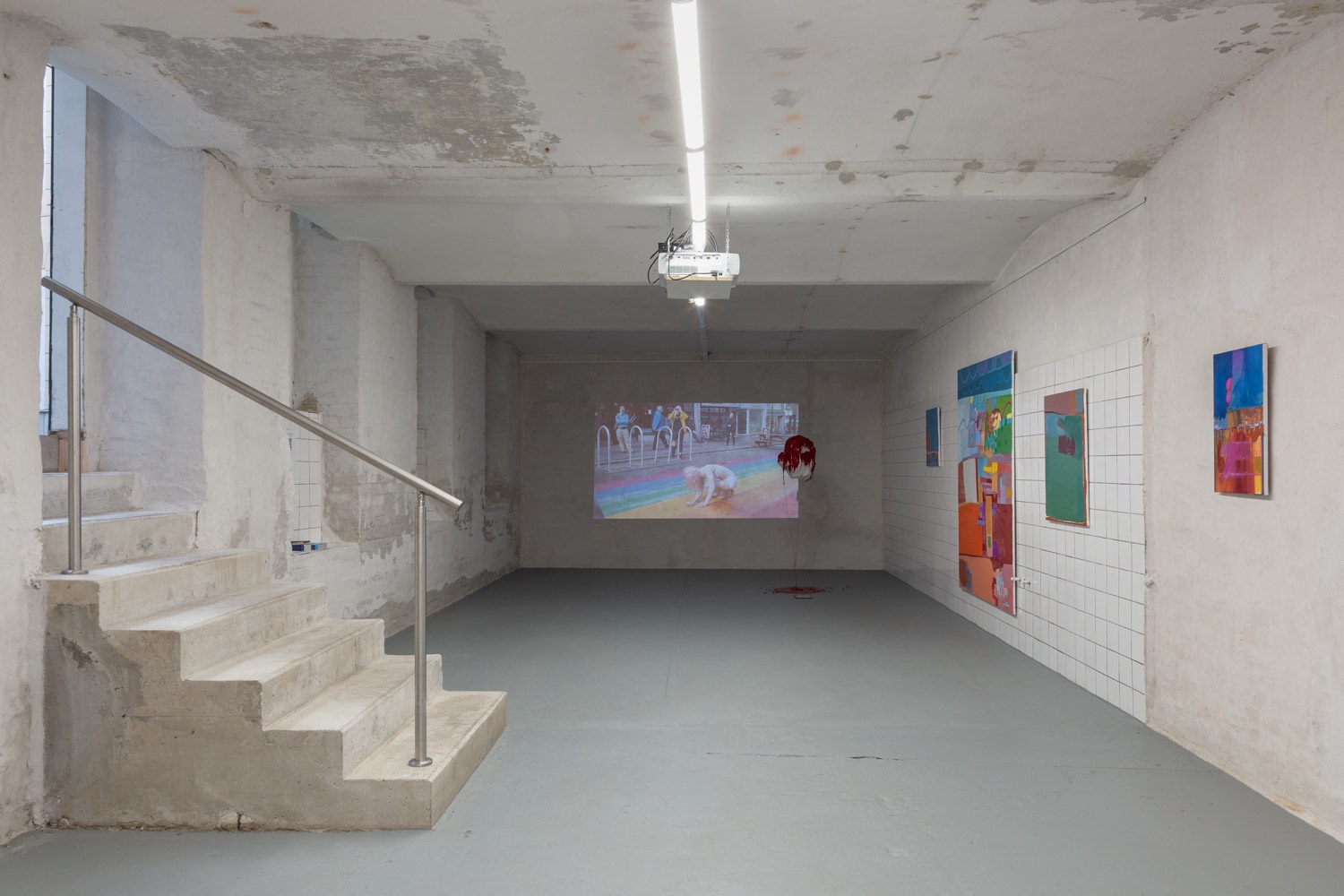
In Reykjavík, Diana Burkot kneels on the street with a bucket of water and her own blood, and scrubs. No police, no arrest, no confrontation. That same year, a Russian court sentences her in absentia to eight years in a penal colony. She performs, in safety, the exact gesture that at home would send her to prison. The performance loses nothing by this. It becomes an instrument of measurement: the distance between two legal orders, two definitions of public space. What the court claims is her body. What remains, and travels, is the act and its statement.
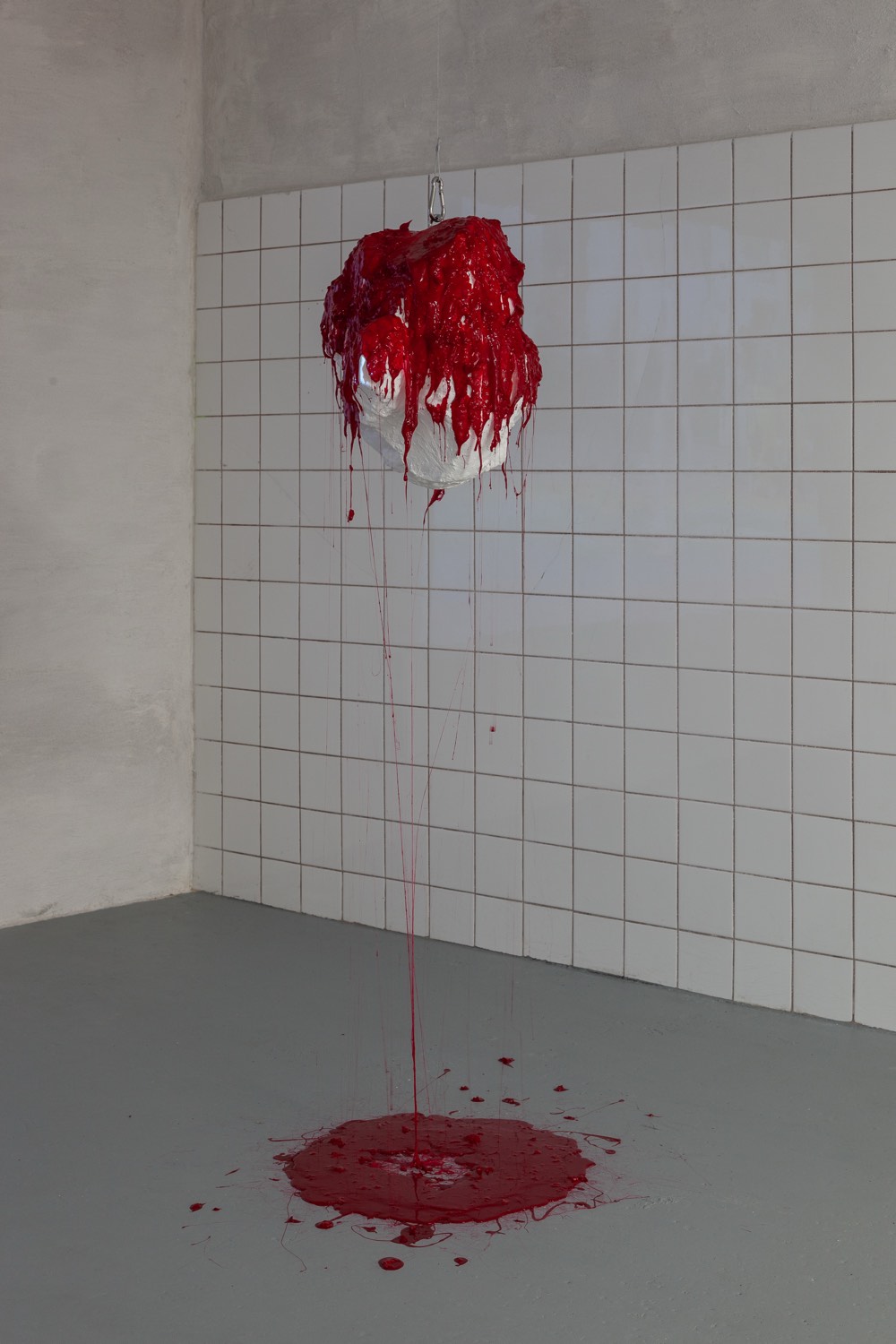
Alongside the video, Burkot, a founding member of Pussy Riot, shows Varða. Along Icelandic paths, stones are piled so that others, in fog or snow, do not lose the way. Her Varða hangs in the room, white stone with a red substance running slowly over it: a marker left not on a mountain path but in the space between languages, between laws, between a country that prosecutes and one that protects.
Burkot's kneeling woman is not new. She is the latest in a long line: the woman condemned by power who does not break, and whose story outlives the sentence passed on her.
Mari Otberg paints that woman in her oldest form, on gold ground, inside a ring of flame: Thecla thrown to the beasts that will not touch her, Joan of Arc in armour, women who walk into the fire. Otberg works in egg tempera and gilding, the language of the icon, techniques that demand layering, repetition, time; in Otberg's work duration is not the subject but the method. The icon was the first technology for making a woman's story last: the body goes to the fire, the name stays, written on the banderole, kept in gold. What remains of these women is not the body but the telling.
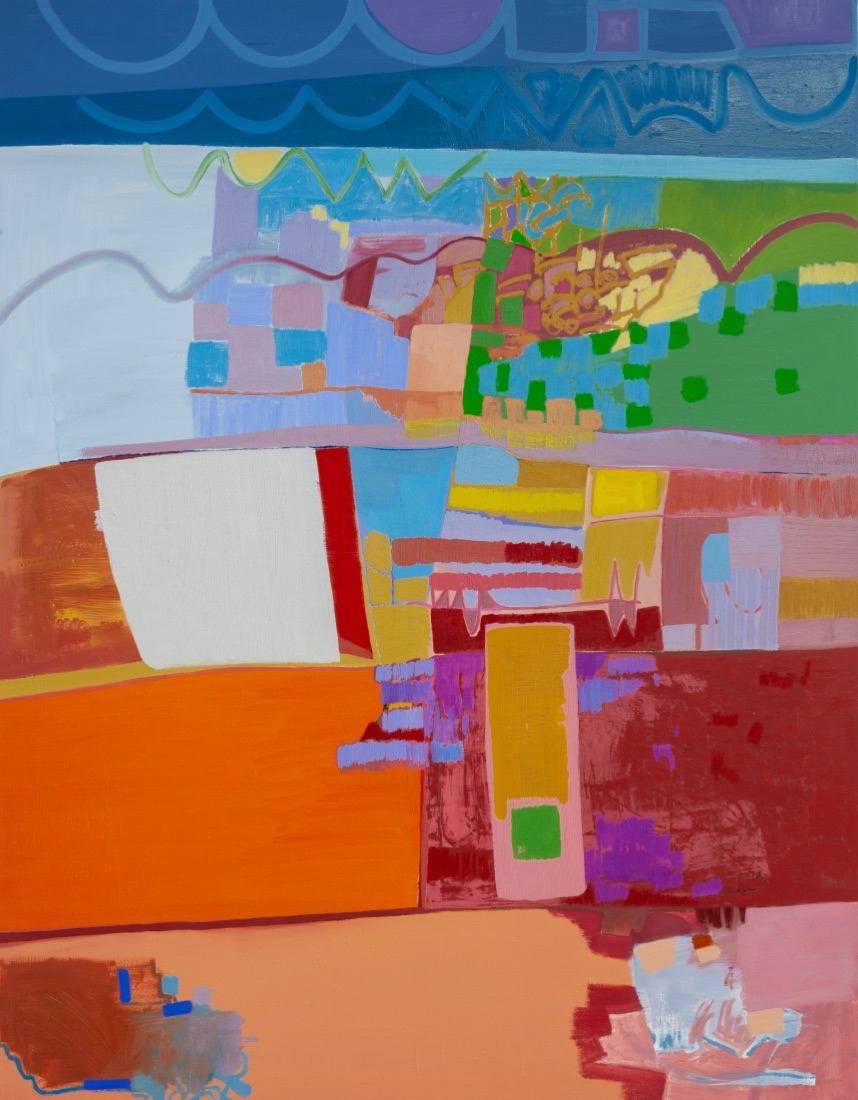
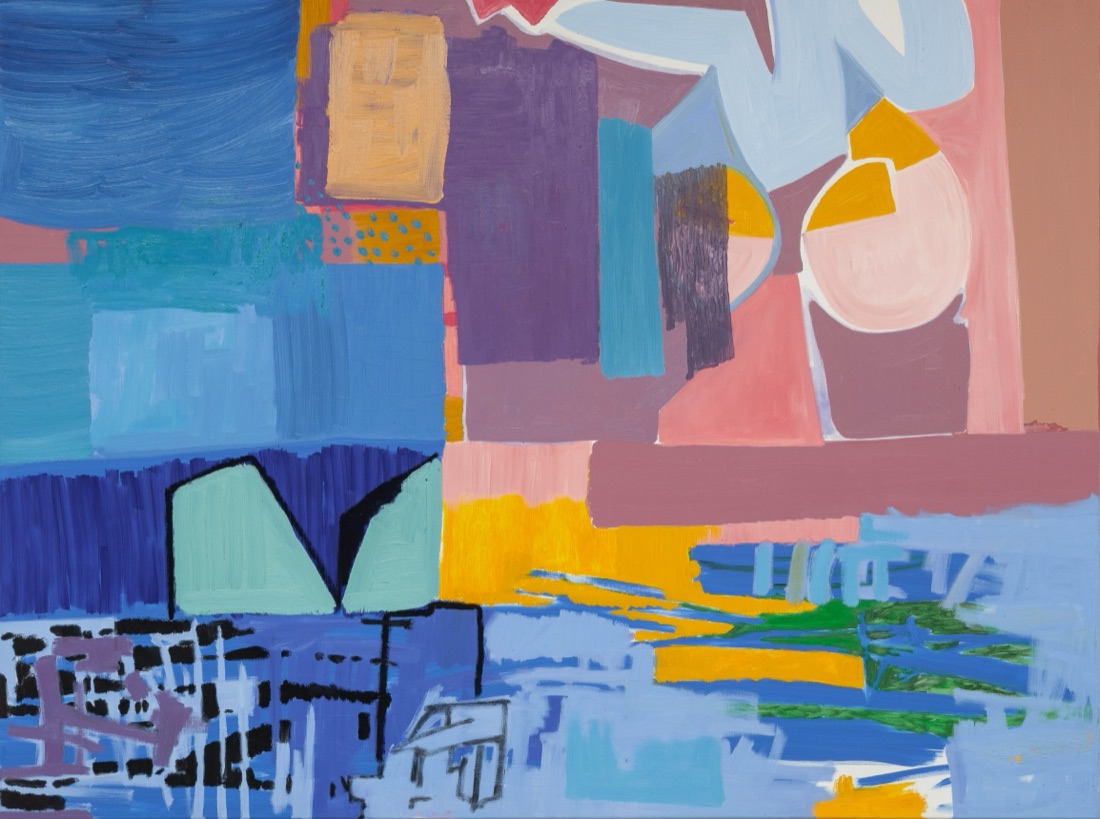
Olivia Kaiser's colour fields and blocks form a language without words: between them open alleys and narrow passages, a rhythm that pushes toward the viewer. The words come afterwards, and from the other direction. Lines by William Carlos Williams serve as titles, commenting on the finished image without claiming it. Between image and title stands what remains in both registers: a poetic moment, a memory, a trace.
Three women, three ways something outlives its own disappearance. The dissident's act survives as testimony, the martyr's body as a story told in gold, the poet's line as the title beside the painting. Each time, what remains is the word. It is the first exhibition of ArtLit Vienna, an agency for art and literature, and what binds these three women is the survival of language.
The space itself is temporary, a basement in Vienna's eighth district, ours for one summer. In September it belongs to another hand. That, too, is part of the question the title asks: what remains when the place does not stay.
In Reykjavík kniet Diana Burkot mit einem Eimer Wasser und ihrem eigenen Blut auf der Straße und schrubbt. Keine Polizei, keine Verhaftung, keine Konfrontation. Im selben Jahr verurteilt sie ein russisches Gericht in Abwesenheit zu acht Jahren Straflager. Sie vollzieht in Sicherheit dieselbe Geste, für die sie zu Hause ins Gefängnis käme. Die Performance verliert dadurch nichts. Sie wird zu einem Messinstrument: dem Abstand zwischen zwei Rechtsordnungen, zwei Definitionen von öffentlichem Raum. Was das Gericht fordert, ist ihr Körper. Was bleibt und weiterreist, ist die Handlung und ihre Aussage.
Neben dem Video zeigt Burkot, Gründungsmitglied von Pussy Riot, Varða. Entlang isländischer Pfade werden Steine aufgeschichtet, damit andere in Nebel oder Schnee den Weg nicht verlieren. Ihre Varða hängt im Raum, weißer Stein, über den eine rote Substanz langsam abläuft: ein Zeichen, hinterlassen nicht auf einem Bergpfad, sondern im Raum zwischen Sprachen, zwischen Rechtssystemen, zwischen einem Land, das verfolgt, und einem, das schützt.
Burkots kniende Frau ist nicht neu. Sie ist die jüngste einer langen Reihe: die Frau, die die Macht verurteilt und die nicht bricht, deren Geschichte das Urteil überlebt.
Mari Otberg malt diese Frau in ihrer ältesten Form, auf Goldgrund, in einem Ring aus Flammen: Thekla, die den Tieren vorgeworfen wird und die sie nicht anrühren, Jeanne d'Arc in Rüstung, Frauen, die ins Feuer gehen. Otberg arbeitet mit Eitempera und Vergoldung, der Sprache der Ikone, Techniken, die Schichtung, Wiederholung und Zeit verlangen; die Dauer ist bei Otberg nicht Thema, sondern Methode. Die Ikone war die erste Technik, um die Geschichte einer Frau dauern zu lassen: der Körper geht ins Feuer, der Name bleibt, auf das Spruchband geschrieben, bewahrt im Gold. Was von diesen Frauen bleibt, ist nicht der Körper, sondern das Erzählen.
Olivia Kaisers Farbfelder und Blöcke bilden eine Sprache ohne Worte: zwischen ihnen öffnen sich Gassen und schmale Durchgänge, ein Rhythmus, der auf den Betrachter zudrängt. Die Worte kommen danach, aus der anderen Richtung. Zeilen von William Carlos Williams dienen als Titel, sie kommentieren das fertige Bild, ohne es zu vereinnahmen. Zwischen Bild und Titel steht, was in beiden Registern bleibt: ein poetischer Moment, eine Erinnerung, eine Spur.
Drei Frauen, drei Arten, wie etwas sein eigenes Verschwinden überdauert. Die Handlung der Dissidentin bleibt als Zeugnis, der Körper der Märtyrerin als eine Geschichte in Gold, die Zeile des Dichters als Titel neben dem Bild. Was bleibt, ist hier jedes Mal das Wort. Es ist die erste Ausstellung von ArtLit Vienna, einer Agentur für Kunst und Literatur. Was diese drei Frauen verbindet, ist das Überleben der Sprache.
Der Raum selbst ist temporär, ein Keller im achten Bezirk, er gehört uns für einen Sommer. Im September gehört er einer anderen Hand. Auch das gehört zur Frage, die der Titel stellt: was bleibt, wenn der Ort nicht bleibt.
Installation views Ausstellungsansichten


Diana Burkot
The works shown here belong to Sweat and Blood, an ongoing long-term interdisciplinary project by Diana Burkot / Pussy Riot, project curator Karin Coenen. Varða was shown in I Am a Refugee, I Am a Weapon, Núllið Gallerý, Reykjavík, 2025. Die hier gezeigten Arbeiten gehören zu Sweat and Blood, einem fortlaufenden interdisziplinären Langzeitprojekt von Diana Burkot / Pussy Riot, Projektkuratorin Karin Coenen. Varða war in I Am a Refugee, I Am a Weapon, Núllið Gallerý, Reykjavík, 2025 zu sehen.


Olivia Kaiser




Mari Otberg

What Remains / Was Bleibt, ArtLit Vienna, 30 July to 10 September 2026. All exhibition photographs: Flavio Palasciano. Was Bleibt / What Remains, ArtLit Vienna, 30. Juli bis 10. September 2026. Alle Ausstellungsfotos: Flavio Palasciano.
The opening is kindly supported by Zeronimo and the Heribert Bayer winery, Neckenmarkt. Die Eröffnung wird freundlich unterstützt von Zeronimo und dem Weingut Heribert Bayer, Neckenmarkt.